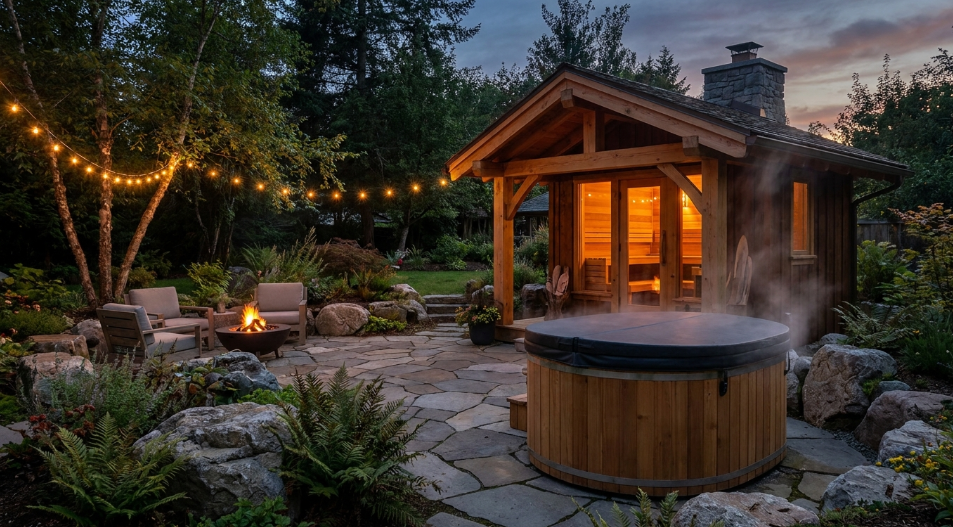
A first home sauna is easiest to start with as a small infrared cabin, since it often runs on a standard outlet, heats in under 15 minutes, and costs less upfront than a traditional heater setup. Budget $1,500 to $5,000 for the unit depending on size and style, plan for a level base and possibly a 240V circuit if going traditional, and expect a few sessions before the heat feels comfortable rather than intense.
What should a beginner actually buy first?
The two main starting points are a small infrared cabin or a compact barrel sauna, and each suits a different kind of beginner. Infrared cabins are the lower-commitment option: cheaper, often plug-and-play on a standard outlet, and quick to heat, which makes them forgiving if someone is not yet sure the habit will stick. Barrel saunas, generally the entry point for a traditional heat experience, need a 240V circuit and a proper outdoor base, but deliver the higher, more intense heat that people who have used a public or gym sauna before tend to expect and prefer.
How much does a first sauna cost to get up and running?
Unit price for a small infrared cabin typically runs $1,500 to $4,000, and a small two- to four-person barrel sauna runs $2,500 to $5,500. On top of the unit, budget for a base, roughly $150 to $800 for gravel or pavers, and for a barrel or larger cabin, a 240V electrical hookup, typically $400 to $900 close to the panel. All in, a beginner going the infrared route can be sauna-ready for $2,000 to $5,000, while a traditional barrel setup more often lands in the $3,500 to $7,000 range once the base and electrical work are included.
What size should a first sauna be?
Bigger than feels necessary is usually the right call, since a “two-person” rating assumes snug seating rather than room to stretch out. A beginner sauna-ing mostly alone still tends to be happier with a unit rated for three or four, since the extra space allows lying down during longer sessions and leaves room if a partner or friend wants to join later. A compact infrared cabin can fit into 4 by 4 feet of floor space, while a small barrel needs closer to 6 by 6 feet including the entry step, so measuring the intended spot before ordering avoids a size mismatch on delivery day.
How does a beginner know what temperature to start at?
Start lower and shorter than feels ambitious. Ten minutes at 140°F to 150°F is a reasonable first few sessions for a traditional heater, working up toward the 170°F to 180°F range that experienced users often settle into over several weeks. Infrared cabins run cooler by design, typically 120°F to 140°F, and tend to feel more approachable for someone who has never used a sauna regularly before. Pushing straight to the highest setting on day one is the most common way beginners have an uncomfortable first experience and give up early.
What mistakes do first-time owners make most often?
Sizing too small, skipping the electrical assessment for a traditional heater, and underestimating basic upkeep are the three most common early mistakes. A close second is treating the sauna as maintenance-free once installed: heater rocks need periodic replacement, and cedar interiors benefit from occasional light conditioning, especially in humid climates. None of this is a heavy list, but going in expecting zero upkeep leads to small issues piling up unnoticed.
A less obvious first-timer mistake is skipping site prep entirely, assuming the delivery crew or a weekend afternoon can sort out placement on the spot. A level, well-drained base, whether that is a simple gravel pad or an existing rated deck, needs to be ready before the unit arrives, not figured out after. Beginners who walk the intended spot with a tape measure and confirm gate width, ground slope, and distance to an outlet or panel before ordering tend to have a much smoother first week of ownership than those who order first and plan placement second.
Where should a beginner start shopping?
Comparing a few models side by side on wood type, heater wattage, and warranty terms, rather than picking the first appealing photo, saves both money and disappointment. Beginners narrowing down their first purchase can browse SweatDecks saunas alongside other specialty retailers to compare entry-level infrared cabins against small barrel units before deciding which category fits their space, budget, and electrical situation.
Is regular sauna use actually worth the investment for a beginner?
The wellness case for it is reasonably well supported for a home-improvement purchase. Review literature summarizing decades of research, much of it from Finnish cohort studies, has associated regular sauna bathing with a range of favorable cardiovascular and general health outcomes. A separate systematic review of dry sauna bathing found broadly similar patterns across the studies it examined. These are observational, association-based findings rather than proof that sauna use alone prevents disease, and a fair beginner’s guide says so plainly rather than overselling it. Even without overselling the evidence, a household that ends up using a home sauna three or four times a week gets meaningfully more exposure to that pattern than someone visiting a public sauna occasionally, which is the practical case for owning one.
Frequently Asked Questions
Is a home sauna worth it for a first-time owner?
For most people who already enjoy sauna use at a gym or spa, yes. The upfront cost is real, but running cost is low, and having one at home removes the barrier of driving somewhere and paying per visit every time.
What is the easiest type of sauna for a beginner to start with?
A small infrared cabin is usually the easiest entry point. It often runs on a standard household outlet, costs less upfront, and heats faster than a traditional heater, which lowers the barrier for someone still deciding if regular use will stick.
How much space does a beginner-size home sauna need?
A compact two-person infrared cabin can fit in as little as 4 by 4 feet of floor space, plus clearance for the door to swing. A small barrel sauna typically needs a footprint closer to 6 by 6 feet including the entry step.
Do beginners need to buy any accessories right away?
A couple of towels and a water bottle cover the basics. A simple thermometer and timer, often built into the unit already, and a bucket and ladle for a traditional heater’s water are the only other items worth having from day one.
How soon will a beginner get used to the heat?
Most people adjust within two to four sessions, especially starting at a lower temperature and shorter time and building up gradually. Tolerance to heat genuinely improves with repeated exposure over the first few weeks.
References
- Cardiovascular and Other Health Benefits of Sauna Bathing: A Review of the Evidence, Mayo Clinic Proceedings, 2018
- Clinical Effects of Regular Dry Sauna Bathing: A Systematic Review, Evidence-Based Complementary and Alternative Medicine, 2018
- Does the Combination of Finnish Sauna Bathing and Other Lifestyle Factors Confer Additional Health Benefits? A Review of the Evidence, Mayo Clinic Proceedings, 2023